

Eyelid Surgery
Asian Blepharoplasty (Double Eyelid Surgery)
Asian double eyelid surgery creates or defines a natural upper eyelid crease, performed with respect for ethnic identity. By Dr. Havva Duru İpek, Istanbul.
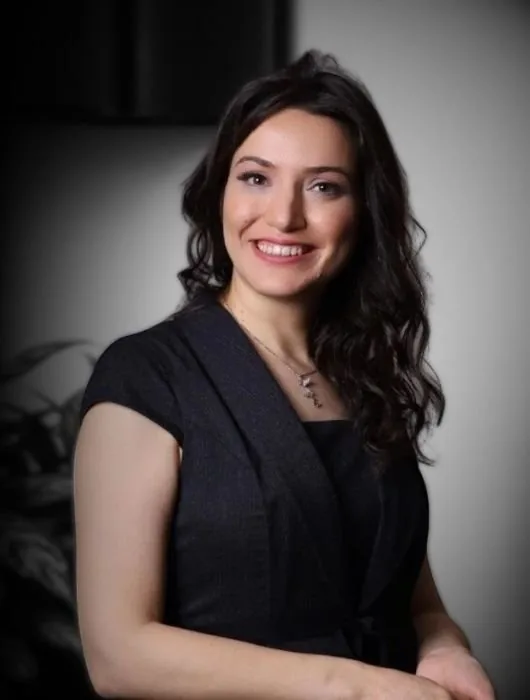 Dr. Havva Duru Ipek wrote and medically reviewed this article · · Credentials and sources
Asian blepharoplasty, also known as double eyelid surgery, creates or defines a natural upper eyelid crease in patients with a single eyelid (epicanthal fold) or an indistinct fold. At Dr. Havva Duru İpek's Nişantaşı clinic, the procedure is performed with deep respect for the patient's ethnic features — the goal is always a natural-looking crease that brightens the eye while preserving cultural identity, never a westernised result.
What Is Asian Blepharoplasty?
Asian blepharoplasty is a specialist form of upper eyelid surgery, distinct from standard upper blepharoplasty in both technique and goal. Rather than simply removing excess skin from an existing crease, the procedure creates or defines a crease where the natural fold is absent or shallow — a common anatomical variation, not a defect to be corrected toward a different ethnicity's eye shape.
The result is planned entirely around the patient's own anatomy: crease height, shape and depth are customised so the outcome reads as a natural feature, not a surgical one.
Incisional vs. Non-Incisional Technique
- Incisional technique. A small incision is used to create a permanent crease with precise control over its height and shape. Generally recommended for thicker eyelid skin, more excess tissue, or patients wanting a defined, long-lasting result.
- Non-incisional (suture) technique. Small internal sutures form the crease without an external incision, offering a less invasive option with a faster recovery. It suits thinner eyelid skin and patients seeking a more conservative change, though the crease may soften over time in some patients compared with the incisional approach.
Which technique fits your eyelid anatomy — skin thickness, amount of excess tissue and the degree of crease definition desired — is determined at consultation, never assumed in advance.
Who Is a Candidate?
Patients with a single eyelid (no visible crease when the eye is open) or an indistinct, shallow or uneven crease are candidates for Asian double eyelid surgery. During consultation, eyelid anatomy, skin thickness and the patient's specific goals for crease height and shape are assessed before a technique is recommended.
What to Expect from the Procedure
The procedure begins with a personal consultation to assess eyelid anatomy and discuss the desired crease height and shape. Depending on skin thickness and the amount of excess tissue present, either the incisional or non-incisional technique is used. As with standard upper blepharoplasty, the procedure is generally not considered a painful one — most patients describe tightness and mild soreness in the first few days.
Recovery
Recovery follows a broadly similar timeline to standard upper blepharoplasty: initial swelling and bruising settle within 7–10 days, with the final crease definition and symmetry appearing gradually over several weeks as fine swelling resolves. Non-dissolvable sutures used in the incisional technique are removed comfortably at the clinic within about a week.
Avoiding an Unnatural Result
The defining risk in Asian blepharoplasty is a crease that looks disconnected from the patient's natural eye shape — either too high, too deep, or symmetrical to a template rather than to the patient's own face. Choosing a surgeon who plans the crease around the individual's specific anatomy, rather than applying a fixed approach to every patient, is central to a result that reads as natural rather than operated.
How It Compares to Standard Upper Blepharoplasty
Standard upper blepharoplasty removes excess skin from an existing crease to reduce hooding. Asian blepharoplasty creates or defines a crease where one is absent or indistinct. The two are sometimes combined when a patient has both a shallow crease and excess upper eyelid skin — this is assessed individually. Learn more about upper blepharoplasty for the broader procedure overview.
Frequently Asked Questions
Frequently asked questions
Will Asian blepharoplasty make my eyes look "Western"?
No. The goal of the procedure at this clinic is a naturally defined crease that brightens and opens the eye while preserving your ethnic features and identity — never a westernised result. The crease height and shape are planned around your own anatomy, not a fixed template.
What is the difference between incisional and non-incisional (suture) technique?
The incisional technique creates a permanent crease through a small incision and is generally recommended for thicker eyelid skin or more excess tissue. The non-incisional (suture) technique uses small internal stitches to form a crease without an external incision, suiting thinner eyelid skin and patients wanting a less invasive option, though the result may be less permanent.
How do I know if I have a single eyelid or an indistinct crease?
A single eyelid (epicanthal fold) has no visible crease line when the eye is open; an indistinct crease is present but shallow or uneven. Both are assessed during your consultation to determine the most suitable technique.
How long do results from double eyelid surgery last?
The incisional technique produces a permanent crease. The non-incisional (suture) technique can soften or loosen over time in some patients, which is discussed as part of choosing between the two approaches.
Can Asian blepharoplasty be combined with other procedures?
Yes, it is often combined with lower blepharoplasty or, less commonly, a temporal lift, depending on the patient's overall goals. Combinations are assessed individually at consultation.
Written and medically reviewed by: Dr. Havva Duru Ipek — Facial Plastic Surgery / Otolaryngology (Ear, Nose & Throat), Istanbul
Last reviewed: · Next review: 2027-09
Site editor: · Our editorial policy
Book an Appointment
The information here is general. What it means for your specific case will become clear after examination and any necessary tests. If you have prior test results or reports, please bring them with you.