

Eyelid Surgery
Upper Blepharoplasty
Upper blepharoplasty is the definitive solution for heavy, hooded upper eyelids, removing excess skin through an incision hidden in the natural eyelid crease.
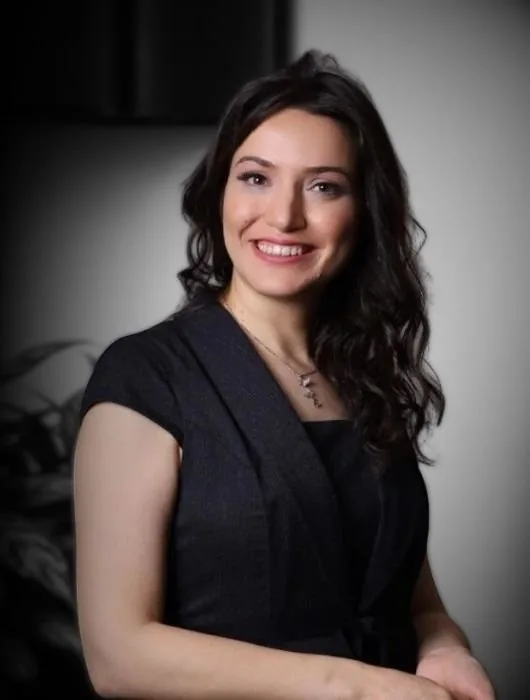 Dr. Havva Duru İpek wrote and medically reviewed this article · · Credentials and sources
| Duration of the operation | 45-75 minutes |
|---|---|
| Anaesthesia | Surgical or awake (local anaesthesia) option, tailored to the patient |
| Onset of effect | Immediate |
| Permanence | Permanent — removed skin does not return |
| Return to daily life | Most patients are comfortable in public within 7-10 days |
| Not carried out in | Active eye infection, uncontrolled dry eye syndrome, or uncontrolled systemic disease affecting wound healing |
| Number of sessions | Single session (can be combined with lower blepharoplasty) |
Upper blepharoplasty is the definitive solution for heavy, hooded upper eyelids — opening up the eye, restoring natural crease definition and delivering a permanently refreshed appearance. Each case is assessed individually, with surgical or awake (local anaesthesia) options tailored to your anatomy and goals.
What is upper blepharoplasty?
Upper blepharoplasty is the definitive solution for excess upper eyelid skin. A precise ellipse of skin — and in some cases, a small amount of orbital fat — is removed through an incision placed in the natural eyelid crease. The crease acts as a perfect hiding place for the incision, making the scar virtually undetectable once healed. Results are permanent and immediate.
Upper blepharoplasty addresses excess skin, fat, and laxity in the upper eyelid. Heavy, drooping upper lids can make the eyes appear tired or permanently sleepy — and when the hooding is significant, it can physically impair the upper visual field.
Asian Upper Blepharoplasty (Double Eyelid Surgery)
A specialist procedure tailored to create or define a natural upper eyelid crease in patients with a single eyelid or indistinct fold. Asian double eyelid surgery is performed with deep respect for the patient's ethnic features — the goal is always a natural-looking crease that brightens the eye while preserving cultural identity, never a westernised result.
What it does and does not do
A correctly performed upper blepharoplasty should not alter the fundamental shape of the eyes. It removes the excess skin that is concealing the natural eye shape — making the eyes look more open and rested, not different. The natural character and expression of the eyes is preserved.
Upper eyelid surgery removes excess skin from the eyelid itself; it cannot fix drooping eyebrows. If the eyebrows have descended and are contributing to the heaviness, combining upper blepharoplasty with a temporal lift or brow lift may give the optimal result — this is assessed during consultation.
Who is a candidate?
Upper blepharoplasty is performed either for functional reasons — where excess eyelid skin physically obstructs the upper visual field — or for cosmetic reasons — to improve the appearance of the eyes without any functional impairment. In many cases, both motivations are present simultaneously.
During consultation, eyelid anatomy, brow position and visual function are assessed to identify whether the concern is predominantly brow-related or eyelid skin-related, and to advise accordingly. Patients with a single eyelid (epicanthal fold) or an indistinct crease may be candidates for Asian double eyelid surgery.
For patients with Turkish private health insurance or SGK (Sosyal Güvenlik Kurumu) coverage, functional upper blepharoplasty — where hooding causes measurable peripheral vision loss — may be partially covered; this requires documentation of visual field impairment, typically assessed via formal visual field testing. Purely cosmetic upper blepharoplasty is an out-of-pocket investment in all cases, and international patients should check with their own insurer regarding any coverage for functional eyelid surgery performed abroad.
How is it performed?
The procedure begins with a personal consultation in which eyelid anatomy, brow position and visual function are assessed before any recommendation is made. A precise ellipse of skin — and in some cases, a small amount of orbital fat — is then removed through an incision placed in the natural eyelid crease, using either a surgical or an awake (local anaesthesia) approach tailored to the patient. The procedure itself is quick, typically taking 45–75 minutes.
All costs — including pre-operative assessment, anaesthesia, the procedure, and follow-up — are provided in writing during the consultation.
Recovery
Recovery is faster than most patients expect, with the majority of visible bruising resolving within 7–10 days. Fine, non-dissolvable sutures are used for the most precise and neat incision closure; these are removed comfortably and painlessly at the clinic 5–7 days after surgery.
Upper eyelid surgery is generally not considered a painful procedure. Most patients describe a feeling of tightness and mild soreness — similar to a strained eye muscle — in the first few days, which is easily managed with over-the-counter pain relief or prescribed medication.
Patients cannot drive themselves home after the procedure, regardless of whether local or general anaesthesia is used: the eyes will be swollen, sensitive to light, and ointment will be applied to the incision area, so a companion must be arranged to drive the patient home safely. International patients staying nearby in Istanbul should arrange their transport and accommodation in advance.
Risks and limits
As with any eyelid procedure, the eye's outer corner and overall almond shape should stay the same in the result — a rounded, pulled-down or startled appearance is a sign that too much tissue was taken. The eyelids should close completely and comfortably; a visible white strip beneath the iris or a lower lid that pulls away are signs of over-correction.
In upper eyelid surgery specifically, the crease should sit at a natural height and follow the eye's own curve, symmetrically on both sides: a crease placed too high reads as surgical immediately, while one that disappears at the outer corner leaves the hooding it was meant to correct.
Alternatives to surgery
Botox can subtly elevate the tail of the brow for a few months, creating a mild opening effect on the upper eyelid — a useful temporary option for patients with mild lid heaviness caused primarily by brow descent. Botox cannot, however, physically remove excess skin: if true skin laxity is present, surgery is the only effective solution.
Devices such as plasma pens or radiofrequency tools offer very mild, temporary skin tightening on the upper eyelid. These are only suitable for patients with minimal excess skin, carry their own risks if performed incorrectly, and are not a substitute for surgery when meaningful hooding is present.
Dr. İpek also discusses combining blepharoplasty with laser skin resurfacing, and the ideal timing between the two, in this article on her academic site.
Frequently asked questions
Can upper blepharoplasty fix my drooping eyebrows?
No — upper eyelid surgery removes excess skin from the eyelid itself. If your eyebrows have descended and are contributing to the heaviness, you may benefit from combining upper blepharoplasty with a temporal lift or brow lift for the optimal result. Dr. İpek assesses brow position carefully during your Istanbul consultation to determine whether this combination is appropriate for you.
Will upper blepharoplasty change the shape of my eyes?
A correctly performed upper blepharoplasty should not alter the fundamental shape of your eyes. It removes the excess skin that is concealing your natural eye shape — making the eyes look more open and rested, not different. The natural character and expression of your eyes is preserved.
Are the sutures dissolvable?
We typically use very fine, non-dissolvable sutures for the most precise and neat incision closure. These are removed comfortably and painlessly at our clinic 5–7 days after surgery — a quick and easy appointment.
How painful is upper blepharoplasty?
Upper eyelid surgery is generally not considered a painful procedure. Most patients describe a feeling of tightness and mild soreness — similar to a strained eye muscle — in the first few days, which is easily managed with over-the-counter pain relief or prescribed medication. Significant pain is not typical.
Can I drive myself home after the procedure?
No — regardless of whether local or general anaesthesia is used. Your eyes will be swollen, sensitive to light, and ointment will be applied to the incision area. You must arrange for a companion to drive you home safely. International patients staying nearby in Istanbul should arrange their transport and accommodation in advance.
Written and medically reviewed by: Dr. Havva Duru İpek — Facial Plastic Surgery / Otolaryngology (Ear, Nose & Throat), Istanbul
Last reviewed: · Next review: 2027-09
Site editor: · Our editorial policy
Sources
Book an Appointment
The information here is general. What it means for your specific case will become clear after examination and any necessary tests. If you have prior test results or reports, please bring them with you.