
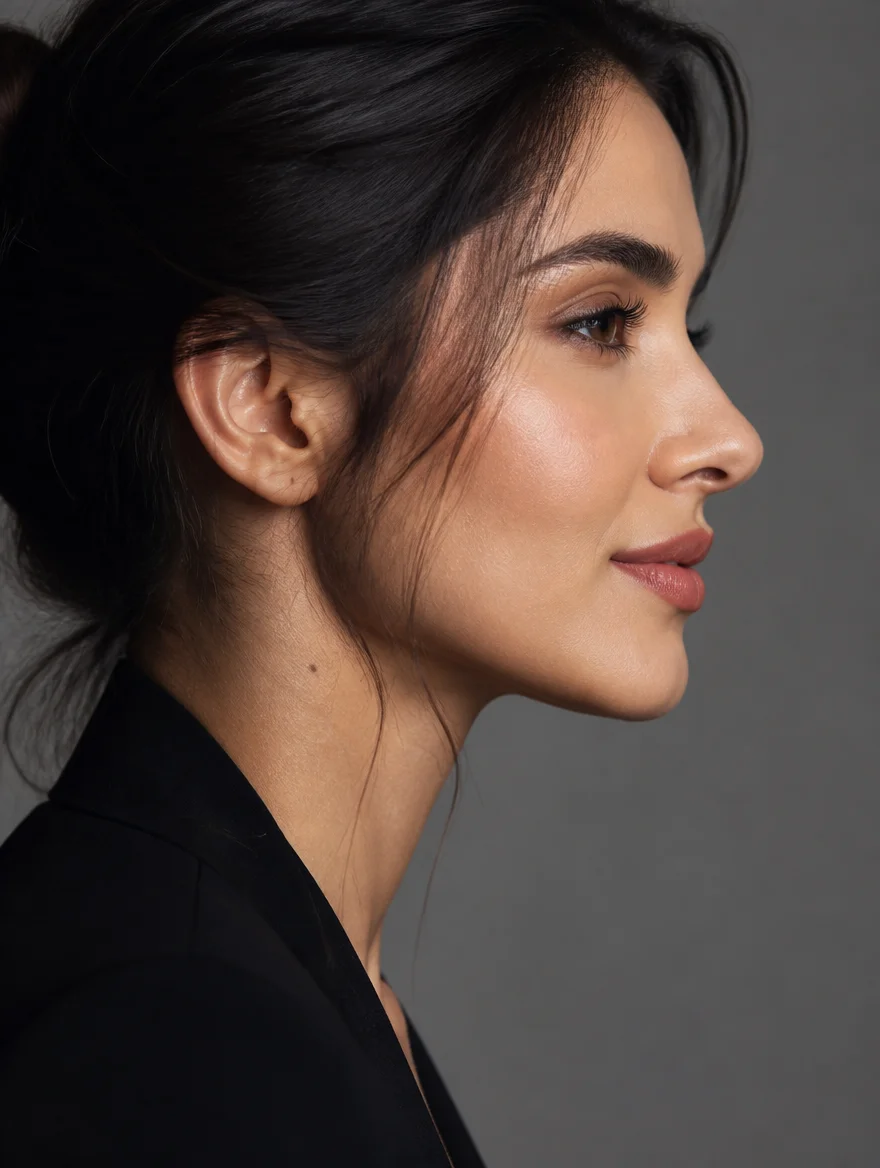
Rhinoplasty
Rhinoplasty Before & After
Real patient results from Dr. Havva Duru İpek's Nişantaşı clinic, presented as video, so results can be judged the way people actually see them.
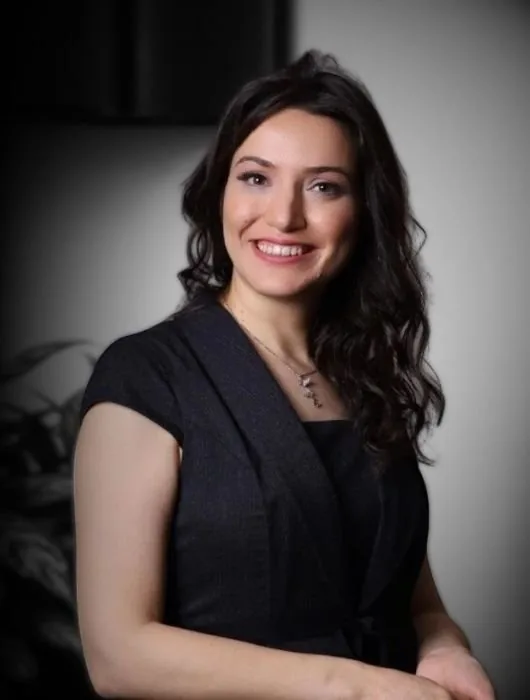 Dr. Havva Duru Ipek wrote and medically reviewed this article · · Credentials and sources
Real patient results from Dr. Havva Duru İpek's Nişantaşı clinic, presented as video rather than still photography. Video shows the nose the way people actually see it — in motion, from every angle, in natural light — which is the only honest way to judge a rhinoplasty result. Two separate galleries are shown below: natural rhinoplasty (first-time surgery) and revision rhinoplasty (correction of a previous operation).
How to Read These Before & After Results
A rhinoplasty result should be assessed on how the nose behaves, not only on how it photographs. Still images can be flattered by lighting, lens choice and angle; video cannot. Every case is filmed under the same conditions, so what is shown is what the result genuinely looks like.
Look at the Profile in Motion
A well-executed dorsum stays smooth as the head turns. Watching the bridge line as the patient rotates from front to profile reveals irregularities, over-resection or an unnatural "scooped" line long before they would show in a still photograph.
Watch the Tip When the Patient Smiles
The tip should stay stable and natural when smiling and speaking. Excessive drooping on smiling, or a tip that looks rigid and immobile, both indicate a technical problem. Natural tip behaviour is one of the hardest things to achieve and the easiest thing to verify on video.
Judge Harmony, Not the Nose Alone
The goal is never a "perfect nose" in isolation — it is a nose that belongs to that face. Each result is assessed against the patient's chin, forehead, cheekbones and overall facial proportion. A result that draws attention to itself has not succeeded, however technically neat it may be.
Check the Timeline
Rhinoplasty results evolve for a long time. Most swelling settles within the first 3–6 months, but the tip in particular continues to refine for 12–18 months — and longer in revision and thick-skinned cases. For that reason, results are only published once healing has settled, never in the first weeks after surgery.
Natural Rhinoplasty — Before & After
Natural rhinoplasty describes first-time surgery on a nose that has never been operated on, planned so that the result never announces itself as surgery. The anatomy is untouched, the cartilage is in its original position and the skin envelope is undisturbed — which makes the healing more predictable and the planning more precise. The aim is a nose that looks like it always belonged to the face, not a nose that looks "done".
Revision Rhinoplasty — Before & After
Revision rhinoplasty corrects the result of a previous operation. Scar tissue, missing or weakened cartilage and an already-thinned skin envelope make these the most demanding cases in facial surgery — frequently requiring cartilage grafting from the rib or ear to rebuild support before any aesthetic refinement is possible. These are secondary cases — noses that arrived at the clinic already operated on, and were rebuilt.
Natural vs. Revision — Why the Two Galleries Are Separate
Comparing a revision result to a first-time result is not a fair comparison, and the two are deliberately kept apart. The starting point is different, the surgical constraints are different, and the realistic endpoint is different: natural cases start from untouched anatomy with predictable healing, where the patient's own septal cartilage is usually sufficient and the aesthetic range is widest; revision cases start from scar tissue and depleted cartilage, with longer, less linear healing, where a rib or ear graft is often required and function and support come first.
In revision surgery the honest goal is a nose that is substantially better, stable and breathing well — not a nose indistinguishable from a first-time natural result. Any surgeon promising otherwise is not describing the biology accurately.
Frequently Asked Questions
Frequently asked questions
Why video instead of before and after photographs?
Because photographs can be manipulated without any editing at all — a different lens, a lower camera angle or a change in lighting can flatter a mediocre result dramatically. Video shows the nose from every angle in continuous motion, including how it behaves when the patient smiles and speaks. It is far harder to disguise a poor result on video, which is precisely why it is used here.
How long after surgery are these videos recorded?
Early results are deliberately avoided. At three months the nose is still visibly swollen, particularly at the tip, and any result shown at that stage will still change — often considerably. A rhinoplasty result should only be judged once it has genuinely settled, which is why the cases shown here are filmed well into the healing process rather than in the first weeks after surgery.
Can I expect the same result as a case shown here?
No result can be promised or copied. Starting anatomy, skin thickness, cartilage strength and healing response are unique to each patient, and they determine what is achievable far more than the surgical technique does. These videos show what was achieved for those particular patients. During consultation, Dr. İpek will explain honestly what is realistic for your nose — including where the limits are.
I have already had rhinoplasty elsewhere. Am I a revision candidate?
Possibly — but timing matters. Revision surgery is generally not performed until at least 12 months after the previous operation, so that swelling has resolved and the tissues have softened. Operating too early risks a worse outcome. Send photographs or arrange a consultation to find out whether you are ready, and what a realistic corrective plan would involve.
Are these patients real, and did they consent?
Yes. Every video published is of a real patient of Dr. Havva Duru İpek, shared with their explicit written consent. Patients who prefer not to be shown publicly are never included, which is why the gallery represents only a portion of the cases performed at the clinic.
Written and medically reviewed by: Dr. Havva Duru Ipek — Facial Plastic Surgery / Otolaryngology (Ear, Nose & Throat), Istanbul
Last reviewed: · Next review: 2027-09
Site editor: · Our editorial policy
Book an Appointment
The information here is general. What it means for your specific case will become clear after examination and any necessary tests. If you have prior test results or reports, please bring them with you.